Nervous system
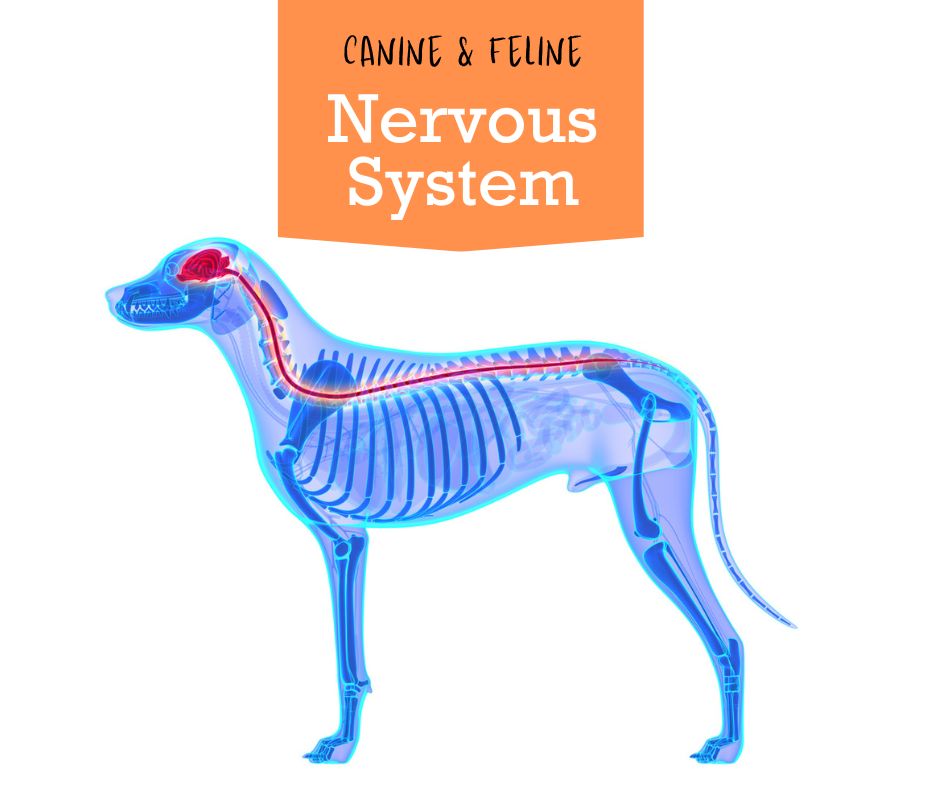 As we explore the bodily systems of our furry and purry friends, there is one system without which all the others would not be able to function: the nervous system. The nervous system consists of the brain, spinal cord and all the nerves and connective tissue that runs between them and the rest of the body’s organs. Think of the nervous system not only as the electrical wiring that powers the house, but with its own power source and smart system – the brain – that maintains equilibrium in every room.
In this article, we explore the structure and function of the nervous system in our pets, as well as disorders of the nervous system and how they affect our pets’ lives.
The canine and feline nervous systems are relatively similar in structure, so we’ll be referring to both in general, unless otherwise specified.
The structure of the nervous system
The nervous system is made up of a few parts, which are connected by structure and distinguished by function. The central nervous system consists of the brain and spinal cord. Connecting the central nervous system to the rest of the body is the peripheral nervous system, made up of sensory neurons and motor neurons.
Sensory neurons carry signals from the body’s sensory organs to the brain, while motor neurons carry response signals from the brain to the muscles (of limbs and organs) and to glands (like the adrenal glands). Motor neurons make up the somatic nervous system, which is responsible for voluntary movement (chewing and running), and the autonomic nervous system, which is responsible for involuntary movement (heartbeat and digestive motility).
The autonomic nervous system further splits into the sympathetic nervous system and the parasympathetic nervous system, which control the involuntary responses to stress and calm, respectively. The whole nervous system is made up of neurons or nerve cells, which connect limbs and muscles, organs, tissues and skin to the nervous system and allow the various body parts to communicate with the brain (in a nutshell).
Let’s take a high-level look at each part of the nervous system and its function:
Central nervous system
The central nervous system is the control centre of the dog or cat’s body. It consists of the brain, which not only controls voluntary and involuntary movements, but also receives and interprets sensory input, produces thoughts, stores memories and initiates responses to stimuli.
The central nervous system is also home to the spinal cord, which is the information signal superhighway from the brain to the rest of the body… and back again.
Peripheral nervous system
The peripheral nervous system comprises an intricate network of sensory neurons and motor neurons.
- Sensory neurons are specially designed to transfer sensory information (sight, sound, smell, taste and touch) to the brain, allowing the animal to sense and interpret their external environment. What do they see? What do they smell? – Is breakfast ready? – What do they taste? Are they warm or cold?
- Motor neurons transfer response signals from the brain to the limbs and organs, creating a voluntary or involuntary reaction to the sensory information.
Example: Your dog is sleeping. He hears the sound of the front door opening and closing (sensory input), and opens his eyes (motor reaction). He sees you walking into the house (sensory input) and wags his tail, puts his ears back and gets up to greet you by licking your hand (motor reaction).
Motor neurons: Somatic & autonomic nervous systems
Movement in the body is not only voluntary (controlled by the somatic nervous system); there are thousands of involuntary movements happening in the body every day. Your pet doesn’t have to think about their heart beating or their food moving through their digestive system. They don’t have to think about relaxing and contracting their muscles when breathing, voluntarily adjusting their blood pressure, or moving waste through their elimination system. These involuntary movements are controlled by the autonomic nervous system, and they happen in order to keep the body and its systems in equilibrium.
Example: Your cat walks over to her food bowl and starts eating. Taking the food into her mouth, chewing and swallowing are voluntary movements (somatic nervous system). The swallowed food is automatically moved along the digestive tract by peristalsis – the involuntary contraction of muscles that create a wave-like motion from the oesophagus to rectum (autonomic nervous system). A few hours later, she will go and scratch in the litterbox (somatic nervous system) because she has the urge to poop (autonomic nervous system).
Autonomic nervous system: Sympathetic & parasympathetic nervous systems
The involuntary movements in a pet’s body are controlled by two different systems, depending on what the external sensory input is telling the animal.
- The sympathetic nervous system controls the involuntary movements involved with the animal’s survival response. In a ‘fight, flight, freeze or fret’ situation, the sympathetic nervous system triggers the release of hormones – adrenaline, noradrenaline and cortisol. These hormones further trigger body systems that prepare the animal for physical activity (fighting, running away, or pacing): an increase in blood sugar, heartrate, lung capacity and muscle tension. There is also a decrease in digestion (the energy is diverted to the muscles) and elimination.
- The parasympathetic nervous system kicks in when the threat is over. It triggers the release of acetylcholine, which counteracts the effects of the cortisol and adrenaline and stimulates the ‘rest and digest’ process. This slows down the heartrate, reduces blood pressure, relaxes muscles, and stimulates digestion again.
Example: Your dog hears an intruder in the house and goes to investigate. His muscles tense (his pose is stiff and upright, with hackles raised), he has a sudden rush of energy, his heartrate increases and his lung capacity expands, as more oxygen will need to be sent around the body faster. The blood vessels in his digestive system constrict and the vessels in his muscles dilate – removing blood from the digestive function and sending it to the motor function. Adrenaline is pumping around his body, readying him for a fight for survival.
When your dog sees that the intruder is, in fact, you, his parasympathetic system counteracts the survival response and his body relaxes. His pupils dilate, his muscles relax, his ears lie flat and his tail wags. It takes him a little longer to calm down than it did for him to go into survival mode, so when you put your hand on his chest, you can still feel his heart racing.
The function of the nervous system
From the structural description, the function of the nervous system can be summarised as follows. The nervous system:
- receives sensory stimuli internally and externally (sensory neurons)
- interprets the sensory stimuli (brain)
- initiates a response to the sensory stimuli (motor neurons, hormones)
Essentially, the function of your pet’s nervous system is to control his body – each and every gland, organ, muscle and system sends and receives signals using the nervous system.
Disorders of the canine or feline nervous system
Given that dogs and cats are biological organisms that are subject to disorder and disruption in their physical biology, pets can experience disorders of the nervous system. These disorders can be caused by:
- genetic or congenital defects (they are born with neurological problems)
- traumatic injury
- infections
- nutritional problems or deficiency
- degenerative issues (progressive deterioration over time)
- inflammation
- cancer
- metabolic problems
- blood supply issues that affect neural tissue
Since neurological disorders can have so many different causes, and can originate in different parts of the nervous system, we’ll cover a few common examples, but this list is by no means exhaustive.
Idiopathic epilepsy
‘Idiopathic’ refers to there not being a known cause for the pet’s seizures. Dogs are more likely to have genetically inherited epilepsy than cats. However, cats can have seizures for a variety of other reasons, such as brain injury, poisoning or disease. Seizures occur when there is abnormal brain activity, especially during a heightened or changing state (such as when the pet is excited, eating or about to fall asleep).
Hydrocephalus
Hydro (water) -cephalus (head) describes the condition in which cerebrospinal fluid does not adequately drain from the brain, giving puppies and kittens an abnormal dome-shaped head with an open fontanelle (soft spot on the head). When the skull bones eventually harden, this can cause pressure on the brain that leads to other issues such as blindness, weakness, abnormally ‘quiet’ or simple behaviour or inability to house train. In puppies, hydrocephalus is mostly due to congenital defect (which often goes hand-in-hand with other problems with their anatomy), while in kittens, it’s caused by in utero exposure to ringworm medication or to the virus that causes feline distemper. Animals with mild hydrocephalus can lead relatively normal lives with treatment. Severe hydrocephalus can lead to death of brain tissue and the resulting complications. Each case will be individually assessed and treatment determined by the vet.
Meningitis and encephalitis
Meningitis (inflammation of the membranes of the brain and spinal cord) and encephalitis (inflammation of the brain) can develop as a result of infection by bacteria, virus, fungus or parasites. They can also be caused by a compromised immune system, chemical toxicity or trauma, as well as septicaemia.
Signs of meningitis and encephalitis include fever, muscle spasms, partial lameness, circling behaviour, loss of balance, loss of consciousness or difficulty performing everyday functions. The vet will test for meningitis and encephalitis by analysing cerebrospinal fluid from a lumbar puncture procedure.
Vestibular disease
Vestibular disease occurs when there is a sudden-onset disturbance of a pet’s ability to maintain balance. The vestibular system consists of an area in the lower brain, called the medulla, and the inner ear. Nerves in the fluid-filled canals of this system constantly send feedback to the brain that corresponds with the animal’s head position and the effects of gravity. When disease, infection, head trauma, tumours or toxicity affect this carefully co-ordinated system, the dog or cat can show signs of imbalance, head tilt, disorientation, jerky eye movements and vomiting.
The vet will perform a range of tests from blood and urine, to X-ray, blood pressure measurement and even MRI and CT scans. Treatment will depend on the cause of the disease.
Intervertebral disc disease
Intervertebral disc disease (IVDD) is a degenerative condition that affects the spine as pets age (it is more commonly seen in dogs, but also affects some cats). It’s characterised by vertebral discs that rupture, slip or herniate. The condition can gradually deteriorate without major symptoms until the pet makes a bold movement (such as jumping to catch a ball or climbing on/off of furniture) that damages the affected vertebral discs and causes acute pain.
The vertebral discs are supposed to cushion the bones of the spine, but IVDD causes them to harden and subsequently pinch or compress the spine. IVDD can also damage spinal nerves, leading to poor bladder and bowel control or even paralysis – depending on where in their spinal column the discs are damaged.
IVDD in the neck causes pets to hold their necks low, arch their backs, and even whimper. They are unable to walk properly or at all. IVDD in the mid-back area can cause pets to hold their bellies tensely; they also show walking difficulties and tend to cross their back feet when walking. IVDD in the lower back can lead to hind leg paralysis, incontinence, and an inability or difficulty with jumping. In order to diagnose IVDD, the vet will need to take some X-rays or even an MRI to see if there are any vertebral discs bulging and where they are located.
Dementia (cognitive dysfunction)
Just like humans, dogs and cats are susceptible to cognitive decline, which is the result of plaque deposits on the brain which has an impact on their brain’s ability to perceive, remember, recognise and learn. The symptoms are similar too:
- spatial disorientation
- changes in appetite
- confusion around basic activities (such as cats forgetting where the litterbox is, or dogs forgetting they just ate and wanting more food)
- changes in behaviour – either becoming less or more affectionate towards their owners, or less tolerable of once familiar pet friends
- changes in their circadian rhythm (sleep and wakefulness)
- mood changes
- disinterest in once exciting activities
Dementia is not curable or reversible, but diet, activity and some medications can slow its progression. It’s also important that pet owners keep things familiar, not scold or punish pets for soiling the house, and keep up with enrichment activities, which naturally stimulate the brain. Food puzzles are a great activity for ageing dogs and cats who may have experienced changes in appetite, mood and sleep/wake cycles.
Hypothyroid neuropathy
Metabolic disorders like hypothyroidism and hyperthyroidism can put pets at risk of developing neurological complications. Hypothyroidism is seen more often in dogs than in cats, and it is associated with the development of neurological symptoms like head tilt, vestibular disease, strabismus (cross-eyed), dry eye (where facial nerves are affected), and reduced muscle tone because of neurological weakness in the limbs.
Cancers in the nervous system
Tumours in the nervous system – such as nerve sheath tumours – can easily affect the front legs and be mistaken for pain from injury or overuse. These types of tumours can arise in the peripheral nervous system, but also in the cranial nerves, which affect the jaw. If the tumour grows too large before being surgically removed, it can be fatal.
How to protect your pet’s nervous system
Pets are susceptible to a very wide variety of diseases and disorders of the nervous system – some of which are genetic and unavoidable. However, for overall nervous system wellness, exercise is the number one recommendation to keep the nervous system healthy. It’s not just about healthy muscle tone and good cardiovascular health, but exercise also reduces stress. Chronic stress can weaken a pet’s neurological health, and it’s also bad for their immune system.
A healthy diet can also help to properly feed and support a healthy nervous system to ensure it functions optimally. Good gut health is directly linked to brain health, so make sure your pet’s gastrointestinal health is in tip top shape.
Also ensure your pet is receiving a healthy dose of B vitamins, which are neurotrophic in nature – supporting the healthy functioning of the nervous system. Omega-3 fatty acids have anti-inflammatory and antioxidant qualities that also help to support brain and nerve functioning.
© 2024 Vetwebsites – The Code Company Trading (Pty) Ltd