Allergies to cats
What are allergies?
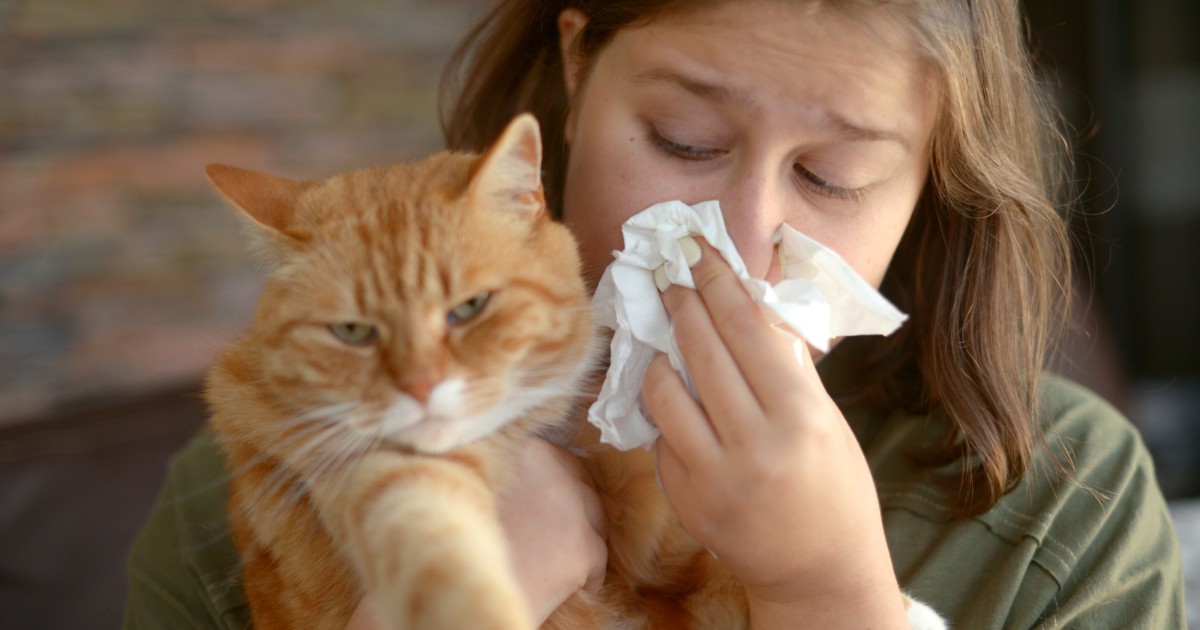 Allergies are your body’s immune system over-reacting to a substance or material that is innocuous and shouldn’t cause a reaction (referred to as an allergen). When the body then encounters this allergen it launches an excessive immune response resulting in symptoms such as sneezing, coughing, wheezing, itchy or swollen eyes, and rashes or hives.
How do cats cause allergies?
Allergies to pets are very common and allergies to cats are twice as common as to dogs. There are 8 allergens produced by cats of which secretoglobulin Fel d 1 is the most important. This substance is produced by sebaceous glands, anal glands and salivary glands in cats. It is found in the saliva and in cat dander and fur.
Which cat breeds are hypoallergenic?
These Fel d 1 allergens are present in all cats which means that unfortunately there is no such thing as a “hypoallergenic cat”. We do know however, that certain breeds of cats produce less Fel d 1, which means that they tend to elicit less severe symptoms in individuals allergic to cats.
It may seem counterintuitive, but many of the breeds that are considered less allergenic are long-haired cats. The theory is that the gene governing the production of Fel d 1 is associated with the gene for medium to long hair.
Studies have also found that female cats produce less allergens that males and that neutered males produce less than intact males.
Based on studies and owner experiences the following cat breeds are considered to be less allergenic:
- Siberian
- Balinese
- Devon Rex
- Cornish Rex
- Abyssinian
How can I decrease my allergy symptoms with a cat in my household?
Apart from the breed you choose to own, there are also other methods to ameliorate symptoms of cat allergies.
- Ensure that your cat is fed a high quality diet, particularly one high in Omega 3-and 6 fatty acids. These fatty acids help to promote healthy skin and coat and decrease dander being shed.
- Ensure that your cats are treated against external parasites such as ticks, fleas and mites at all times to minimize scratching, which will release more dander into the air.
- Consider choosing smooth flooring instead of carpeting and furnishings such as blinds instead of curtains. Carpets and soft furnishings, particularly those with a thick pile, are far more inclined to accumulate dander.
- Vacuum clean your home regularly with a vacuum cleaner that filters fine particles (so that they are not simply recycled back into the air).
- Clean hard furnishings and furniture with damp cloths, avoid feather dusters which will simply lift all the dust and dander back up into the air.
- Air filters with High Efficiency Particulate Air (HEPA) filters will help to decrease allergens in the air.
- Ensure good ventilation in the home.
- Bathing your cat will decrease the amount of dander on their body and in the air. However the levels of dander will return back to normal on your cat within two days and the effect in the home is less than 24 hours. Bathing your cat every week or two may decrease the amount of allergens in your home over time.
Depending on the severity of your allergies, you can take antihistamines to treat the symptoms. Should you be planning on visiting a household with cats in, it would be beneficial to start taking antihistamines a few weeks before your visit.
If your symptoms are very severe, speak to your primary health care practitioner about allergen specific immunotherapy. This consists of periodic injections to gradually desensitize your body to a particular allergen. This type of gradual desensitization may explain why certain people with mild symptoms may develop tolerance to the cats in their household.
© 2023 Vetwebsites – The Code Company Trading (Pty) Ltd